

The Question of Justin Bieber's Soul | Track Ten: Resurrection
How an album once deemed a "sales disaster" became Bieber's most important


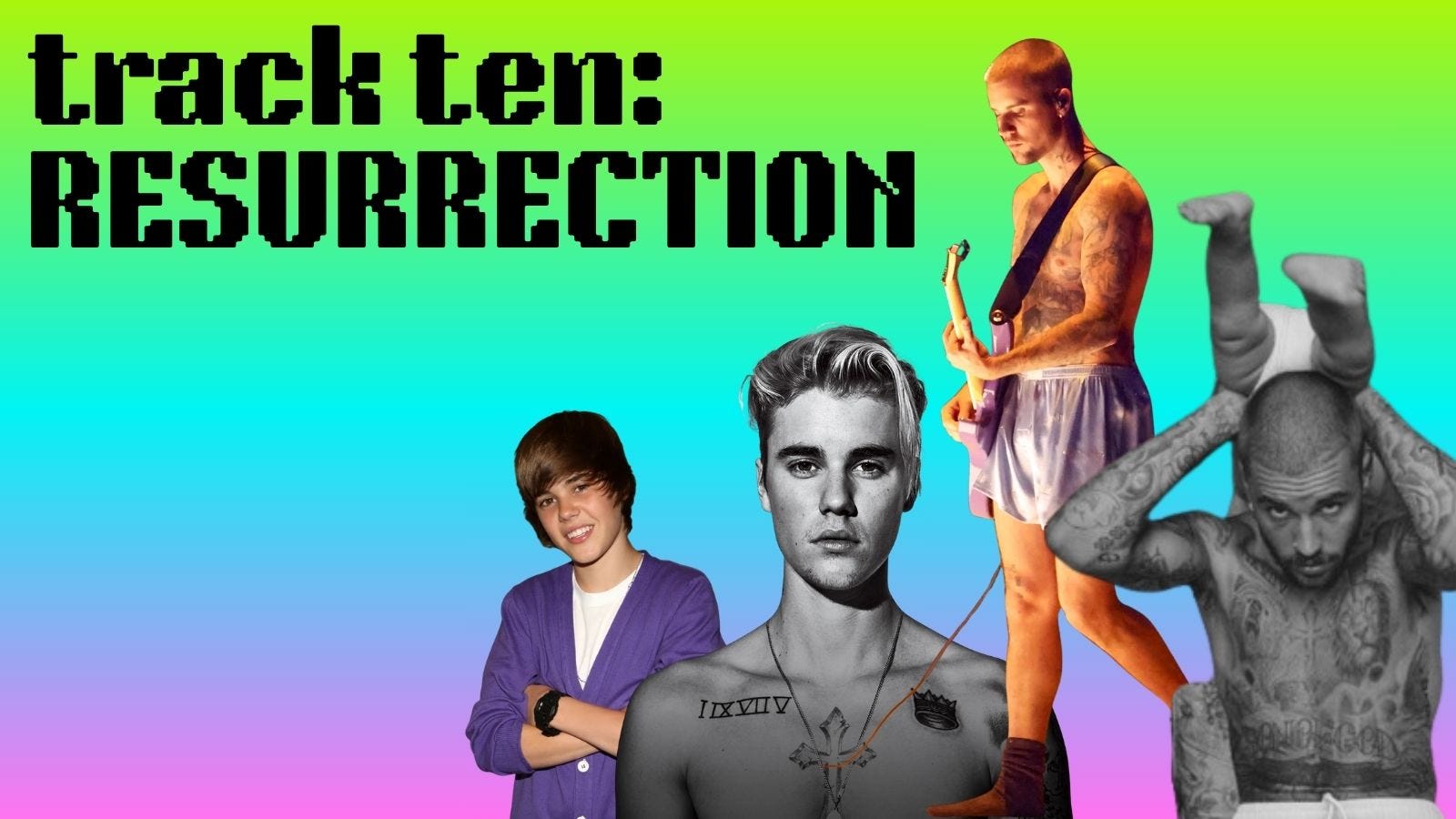
If you’re reading Track Ten for the first time, welcome! Today’s essay by Alex Lewis is part of Resurrection, my collaborative collection which traces moments in which pop stars rise from the ashes, whether through commercial resurgence, sonic reinvention, or image rehabilitation. I hope you’ll consider subscribing to get the rest of the collection plus weekly chart roundups and more pieces analyzing the impact of pop music, stars, and moments from the past and present. Catch up on the collection so far on the landing page.
Alex is behind the substack Feels Like Home, where he passionately covers music and writes beautiful personal essays, too. He is an incredible community builder, and his work developing The Album Club makes me wish I lived in Columbus so I could join! I could not be happier to have him as part of this collaborative collection.
Today, he writes about an artist who has been through nearly two decades of controversies and reinventions, Justin Bieber. With his headlining Coachella drawing its own hot takes, Alex dives into Justin’s relationship with Blackness and Black music across his career, at times using it to reset his image.
~Eric
The Question of Justin Bieber’s Soul
By Alex Lewis
For all we knew, Bobby Caldwell could’ve been Black. The soul singer veiled himself in shadows on the cover of his debut album. If this is how you’re learning Caldwell is white, don’t worry. You’re not alone. In fact, I got tripped up a couple years ago when I almost submitted “What You Won’t Do For Love” for Naima Cochrane’s Black Music Month Challenge on Instagram. I probably could’ve gotten away with it, too. The thing is, Caldwell’s label, TK Records, encouraged this guessing game. They had Caldwell scrap the original album cover where he was clearly pictured for the silhouetted version. “I guess they got skittish with going to Black radio with somebody who was whiter than a loaf of bread,” Caldwell told Red Bull’s Jered Stuffco in 2015.
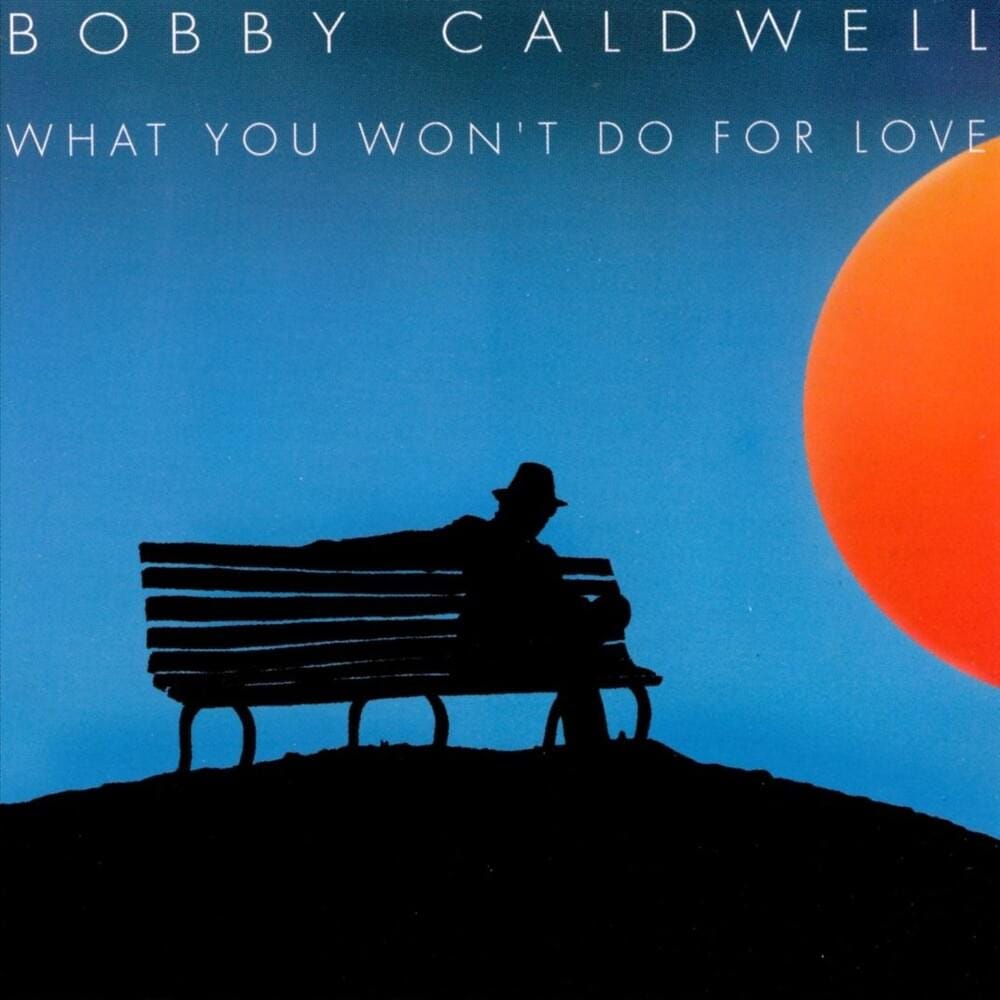
While the late Caldwell has been stumping listeners for nearly 50 years, he never understood the confusion. “Quite honestly, I never thought I sounded Black,” said Caldwell. “I thought I sounded like a white guy that was influenced by R&B music.” There’s a clarity here that feels refreshing in the age of Jack Harlow laughing with white journalists about how he “got Blacker” and Druski telling Justin Bieber that the Canadian singer’s soul is Black despite his white skin. Weirdness aside, both artists have waxed poetic about their love for the Black artform. Harlow named R&B legends D’Angelo and Erykah Badu as his north stars—while Bieber was co-signed by Usher and aspired to follow in the footsteps of Michael Jackson.
I’m most fascinated by Bieber. He never gave himself the luxury of shadows. As early as 12 years old, Bieber was uploading videos to YouTube of him singing R&B hits like Ne-Yo’s “So Sick” and Chris Brown’s “With You.” His former manager, Scooter Braun, stumbled across these videos and worked tirelessly to sign Bieber after being impressed with his voice. This resulted in a record deal with Braun and Usher and eventually a larger deal with L.A. Reid’s Island Records. It wasn’t long before this bubble exploded into a full-out Bieber fever. Reid, who signed a 14-year-old Usher and had a hand in the careers of Kanye West, Rihanna, and Mariah Carey, said about Bieber: “I’ve seen an artist ascend this fast before but never this big.” He compared Bieber’s meteoric rise and cultural takeover to that of The Beatles.
“Lightskin Bieber” and the Embrace of R&B on Journals
Bieber’s path to superstardom wouldn’t be without R&B. His debut EP, My World, features songwriting credits from titans of the genre, including The-Dream, Lonnie Breaux (aka Frank Ocean), and of course, Usher. While he continued weaving this sound into future projects, Bieber made his first full swing into R&B with a collection of songs released in 2013 that he called Journals. As a sophomore in college at the time, I remember rapping along to Chance the Rapper’s verse on “Confident” and singing “All That Matters” at the top of my lungs. There’s a massive misstep on this project with the addition of R. Kelly, who has faced sexual abuse allegations for over 20 years and is currently serving more than 30 years in prison for sex crimes. Even with this regretful decision, Journals has become a fan favorite despite its lackluster commercial success. I’d argue that, without Journals, we don’t get Bieber’s latest return to glory that is his SWAG series and headlining set at Coachella, which has adequately been coined “Bieberchella.”
“Lightskin Bieber” is the archangel of the Journals era. It’s rather unsettling to lend Bieber any semblance of Black identity for his musical stylings and fashion sense, but Bieber’s proximity to Blackness helped him push beyond the innocence—or whiteness—of childhood stardom. Coolness is synonymous with Blackness although it’s not always appreciated in Black people. In Cool Pose: The Dilemmas of Black Manhood in America by Richard Majors and Janet Mancini Billson, coolness is described as “poise under pressure and the ability to maintain detachment, even during tense encounters.” Later, they add, “People are drawn to the power of the cool black male because he epitomizes control, strength, and pride. He presents a mysterious challenge. He is charismatic, suave, debonair, entertaining.” In other words, Bieber’s “lightskin” persona is just him cosplaying the characteristics he saw in Black men he admired. Journals was Bieber’s foray into expressing these traits to the fullest extent. But despite his best efforts to be perceived otherwise, he’s still white.
Caldwell could’ve been Black, but the hit show Atlanta gave Bieber the gift he longed for: they created a reality where he is. During the show’s fifth episode, Donald Glover’s character encounters Justin Bieber, played by Black actor Austin Crute, at a celebrity basketball game. Through all of the character’s wild antics, you’re left wondering, ‘What if Bieber was Black? Would he have been able to get away with as much as he has? Would he still have his fans’ support?’ I wrote about Bieber’s struggles with fame in a recent essay, but it’s worth reiterating that we weren’t just dealing with a spoiled kid who dreamed of doing whatever he wanted. Bieber has maybe had more eyes on him than anyone else in the history of the world. This includes paparazzi at every turn, intrusive adults who saw no issues with sexualizing a teenager, and music business professionals who didn’t have his best interest at heart. I admire how Bieber’s setbacks haven’t held him down. Each project has brought him closer to the music he wants to make even if institutions won’t recognize it as such.
Going Through Changes
Although he couldn’t avoid pop music, Bieber kept a strong R&B streak after Journals. I spent my senior year of college riding around to the Fear of God-soaked vibes of his 2015 album, Purpose, and happily welcomed Changes a month before we were forced inside due to the COVID-19 pandemic in 2020. In a similar vein to Journals, Changes is as close to an R&B album as Bieber can get. It’s a continuation of his work with songwriter/producer Jason “Poo Bear” Boyd—a creative partnership that started with Journals. Poo Bear is foundational to Bieber’s wholehearted embrace of the genre. With hits like “Yummy” and “Intentions” (featuring Quavo), Changes was nominated for Best Pop Vocal Album at the 63rd Grammy Awards. Bieber went public with his disdain for the decision. He shared on Instagram how it felt “weird” that the project was recognized as pop instead of R&B. “I set out to make an R&B album,” he wrote. “Changes was and is an R&B album.” He later added, “I grew up admiring R&B music and wished to make a project that would embody that sound.”
Bieber caught himself on the flipside of a racist framing of genre that says white people make pop music and Black people make hip hop and R&B. Tyler, The Creator had his own qualms with the Grammys after his subversive album, IGOR, won Best Rap Album. “It sucks that whenever we—and I mean guys that look like me—do anything that’s genre-bending… they always put it in a ‘rap’ or ‘urban’ category,” Tyler complained after the ceremony. He referred to the categorization as a “politically correct way to say the n-word” and added, “I’m just like, ‘Why can’t we be in pop?’ Half of me feels like the ‘rap’ nomination was just a backhanded compliment.”
Tyler wanted what Bieber rejected and vice versa. But to take it even further, both artists longed for expansiveness. They craved the freedom to be whatever they want. IGOR is a rebellion against what was expected, just as Caldwell’s presence was within R&B and soul music, and it’s what Bieber has been in pursuit of throughout his career—most clearly in his throughline from Journals to SWAG. When Druski tells Justin, “Your soul is Black,” Bieber thanks him. For the lifelong R&B fan, this is a compliment and possibly a fulfillment of all he’s ever wanted. To be viewed as otherwise—or even worse, incapable of accessing the melanated soul—is an affront to Canada’s own. Bieber believes Blackness should be his, and what could be whiter than that?
Come back next week for a deep dive into how artists use collaboration to reinvent themselves through a look at the career of Elton John.
Track Ten Vol. 1: Resurrection traces moments in which pop stars rise from the ashes, whether through commercial resurgence, sonic reinvention, or image rehabilitation. Each piece is designed to stand on its own, but together they tell the story of why, and how, musicians are able to bring themselves back from the brink. You can follow along by hitting subscribe, or visit the collection landing page to view every piece that’s been published so far.
 | A guest post by
|